Best Foods & Supplements to Boost Metabolism in Men
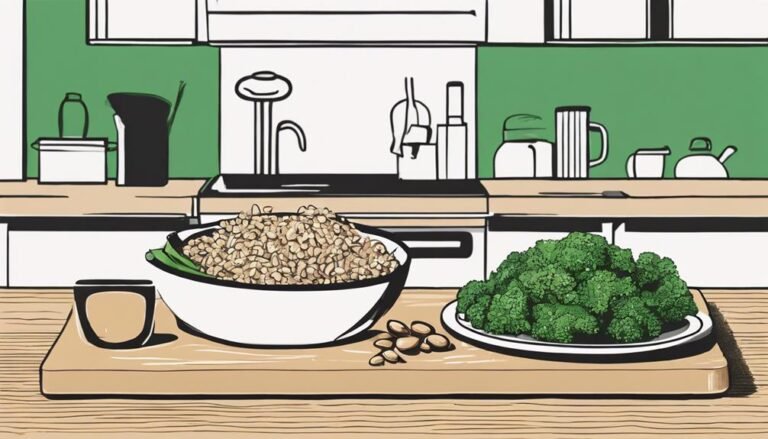
To boost your metabolism, focus on nutrient-dense foods like leafy greens, lean proteins, and healthy fats. Incorporate avocados, nuts, and legumes for sustained energy and satiety. Don’t forget about essential vitamins like B vitamins and minerals such as magnesium, which support metabolic function. Caffeine and green tea extract are great supplements that can enhance fat burning. With the right dietary choices and supplements, you’ll optimize your metabolic efficiency and reach your fitness goals. There’s much more to explore!
Key Takeaways
- Incorporate lean protein sources like chicken, fish, and legumes to preserve muscle mass and enhance metabolic rate.
- Include healthy fats such as avocados, nuts, and olive oil to regulate hunger hormones and support fat burning.
- Opt for nutrient-dense foods like leafy greens, berries, and whole grains to provide essential vitamins and minerals for optimal energy production.
- Consider supplements like caffeine and green tea extract to enhance thermogenesis and promote fat loss effectively.
- Ensure adequate intake of B vitamins, Vitamin D, and magnesium to support metabolic health and energy production.
Nutrient-Dense Foods to Elevate Energy Levels
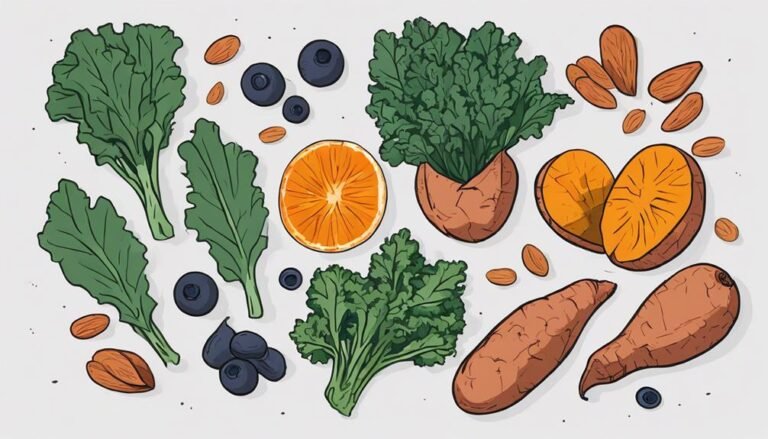
When it comes to boosting your metabolism, incorporating nutrient-dense foods into your diet can make a significant difference. Foods rich in vitamins and minerals, like leafy greens, berries, and whole grains, provide the energy you need without the empty calories. Additionally, understanding the impact of hormonal imbalances on fat accumulation can help you tailor your diet strategically.
Avocados, nuts, and seeds offer healthy fats that help keep you satisfied. Don’t forget legumes; they’re packed with fiber and protein. Additionally, a balanced diet rich in whole foods is crucial for sustained energy levels throughout the day.
The Role of Protein in Metabolism Boost
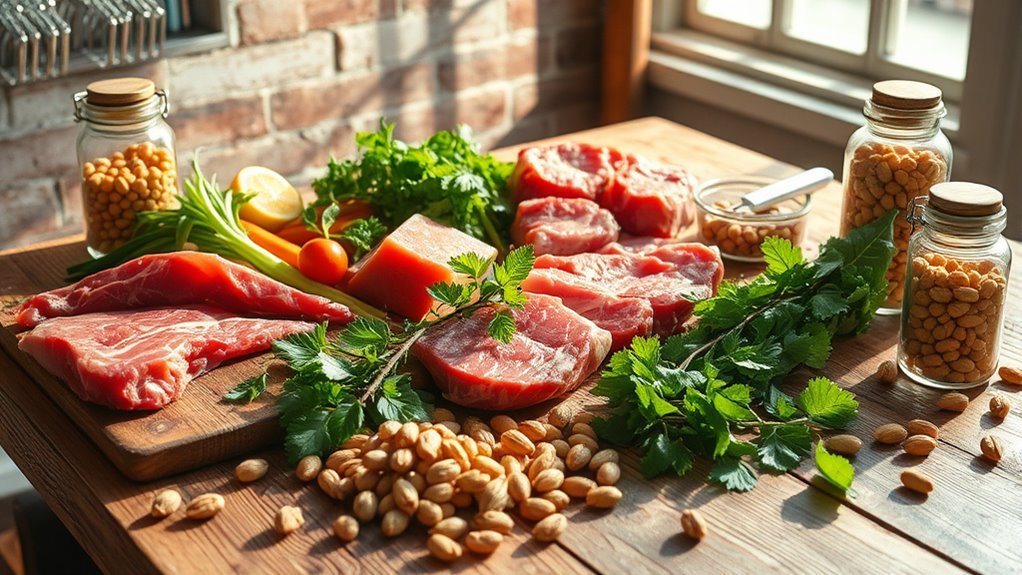
Protein plays an essential role in boosting metabolism, acting as a key player in your body’s energy expenditure.
When you consume protein, it requires more energy to digest compared to carbohydrates or fats, increasing your overall calorie burn—a process known as the thermic effect of food.
Additionally, protein helps preserve lean muscle mass, which is vital since muscle burns more calories at rest than fat. Therefore, adequate protein intake can also support optimal metabolic health, which is critical for overall well-being.
Protein is crucial for maintaining lean muscle mass, which efficiently burns more calories even when at rest.
By incorporating adequate protein into your diet, you’re not just fueling your body, but also enhancing your metabolic rate.
Aim for lean sources like chicken, fish, beans, and dairy to reap the benefits.
Moreover, boosting metabolism through protein consumption can be complemented by lifestyle factors such as regular exercise and quality sleep, ensuring optimal metabolic health.
Healthy Fats That Ignite Fat Burning
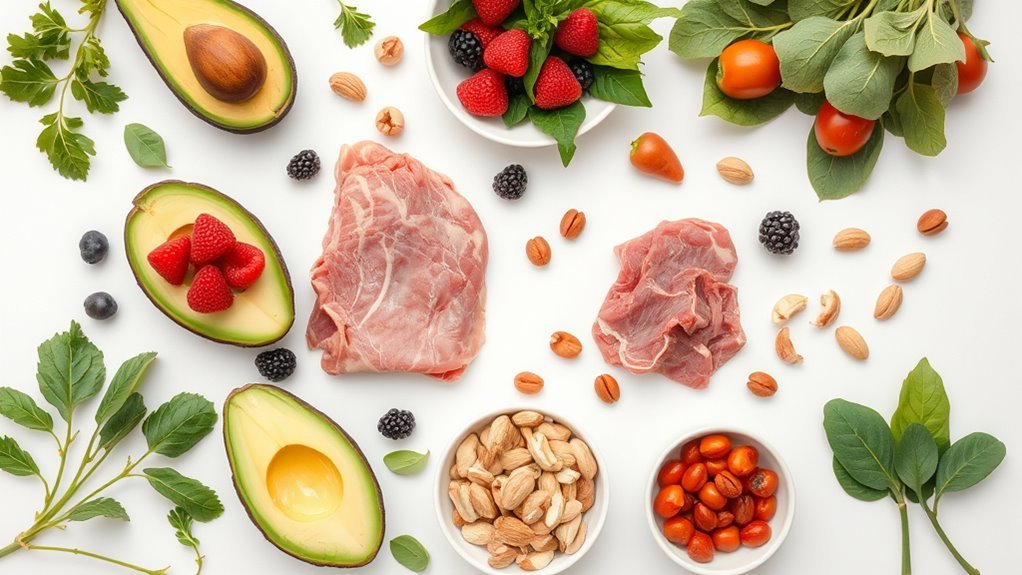
Incorporating healthy fats into your diet can markedly enhance your fat-burning potential. These fats help regulate hunger hormones and improve your metabolism. Additionally, a well-balanced diet that includes specific micronutrients can support hormone production, further aiding in fat burning.
Not all fats are created equal; here are some that could ignite your fat burning:
- Avocados: Packed with monounsaturated fats, they keep you satisfied and support heart health.
- Nuts: Rich in protein and healthy fats, they offer great energy and boost metabolism.
- Olive Oil: A cornerstone of the Mediterranean diet, it’s known for its anti-inflammatory properties and aids in fat loss.
Additionally, increasing your protein intake can further boost metabolism and enhance the effects of these healthy fats. Embracing these foods can contribute to a leaner, healthier physique.
Essential Vitamins and Minerals for Metabolic Support
While healthy fats play an essential role in fat burning, crucial vitamins and minerals also provide significant support for your metabolism. Key nutrients like B vitamins, vitamin D, magnesium, and zinc can enhance energy production and metabolic efficiency. Additionally, understanding the biological reasons behind metabolic slowdown is crucial for effectively implementing dietary changes.
| Vitamin/Mineral | Role in Metabolism |
|---|---|
| B Vitamins | Energy production |
| Vitamin D | Hormonal balance |
| Magnesium | Supports muscle function |
| Zinc | Aids in protein synthesis |
Incorporating these nutrients into your diet can guarantee your metabolism runs smoothly, helping you achieve your fitness goals more effectively.
Top Supplements for Enhanced Metabolic Function
Adding the right supplements can further enhance your metabolic function, complementing the vitamins and minerals that support energy production and efficiency.
Consider incorporating the following top supplements into your routine:
- Caffeine: Boosts energy and thermogenesis, aiding in fat loss.
- Green Tea Extract: Contains catechins that can increase fat oxidation and metabolic rate.
- B Vitamins: Essential for converting food into energy, these help optimize metabolic processes.
Questions
How Does Sleep Affect Metabolism in Men?
Sleep considerably affects metabolism in men; when you don’t get enough rest, your body struggles to regulate hormones that control hunger and fat storage, potentially leading to weight gain and decreased energy levels.
Can Stress Impact Metabolic Rates?
Yes, stress can impact metabolic rates. When you’re stressed, your body releases cortisol, which may slow metabolism and increase fat storage. Managing stress through relaxation techniques can help maintain a healthier metabolic rate.
What Are the Symptoms of a Slow Metabolism?
You might experience fatigue, weight gain, difficulty losing weight, low energy levels, dry skin, hair loss, and constant coldness if your metabolism’s slow. Recognizing these symptoms early can help you address potential underlying issues effectively.
Are There Any Specific Exercises That Boost Metabolism?
Yes, high-intensity interval training (HIIT) and strength training boost metabolism effectively. Incorporating exercises like sprinting, weightlifting, or circuit workouts into your routine can help increase calorie burn and enhance your metabolic rate.
How Does Age Affect Metabolism in Men?
As you age, your metabolism can drop by about 5% each decade after 30. This slowdown affects energy levels, making it essential to stay active and maintain a balanced diet to counteract these changes.
Conclusion
Incorporating these foods and supplements can make a real difference in boosting your metabolism. Did you know that increasing your protein intake can elevate your metabolic rate by up to 30% for a few hours after eating? By fueling your body with the right nutrients—like healthy fats and essential vitamins—you’ll not only rev up your metabolism but also enhance your overall energy levels. So, embrace these choices and feel the positive changes in your daily life!